Over the past several months, I have been developing an idea that I call Functional Health Opportunity. Early in the project I reviewed the literature to understand what had already been done, but after that I intentionally stopped searching for similar work. I wanted the framework to develop from the questions I kept encountering rather than from trying to fit it into someone else's model.
After returning to university, I noticed a common theme in many geography and public health projects. One presentation focused on food deserts. Another examined healthcare accessibility. Others looked at poverty, transportation, or education. Each was valuable, but I always came away with the same question: Is any one of these factors enough to explain why one neighborhood is healthier than another?
The more I explored the problem, the more it became clear that the answer was no. Distance to a hospital certainly matters, but so do chronic disease, income, education, transportation, food access, and the many social conditions that influence whether people can actually benefit from available resources. Good health is rarely determined by a single variable, it is shaped by how these factors interact.
As the project matured, I began comparing my approach with the broader research literature again. There is no shortage of studies demonstrating that social and environmental conditions influence health outcomes. What surprised me was how few attempts I found to bring these different dimensions together into a single spatial measure of neighborhood health opportunity. Even fewer present the results in a way that allows planners, public health agencies, and community organizations to quickly see where opportunities are greatest and where barriers overlap.
The working definition that has emerged from this research is:
A Functional Health Opportunity Index estimates how effectively a neighborhood enables residents to achieve and maintain good health by integrating access to essential resources with the social and health conditions that influence people's ability to benefit from those resources.
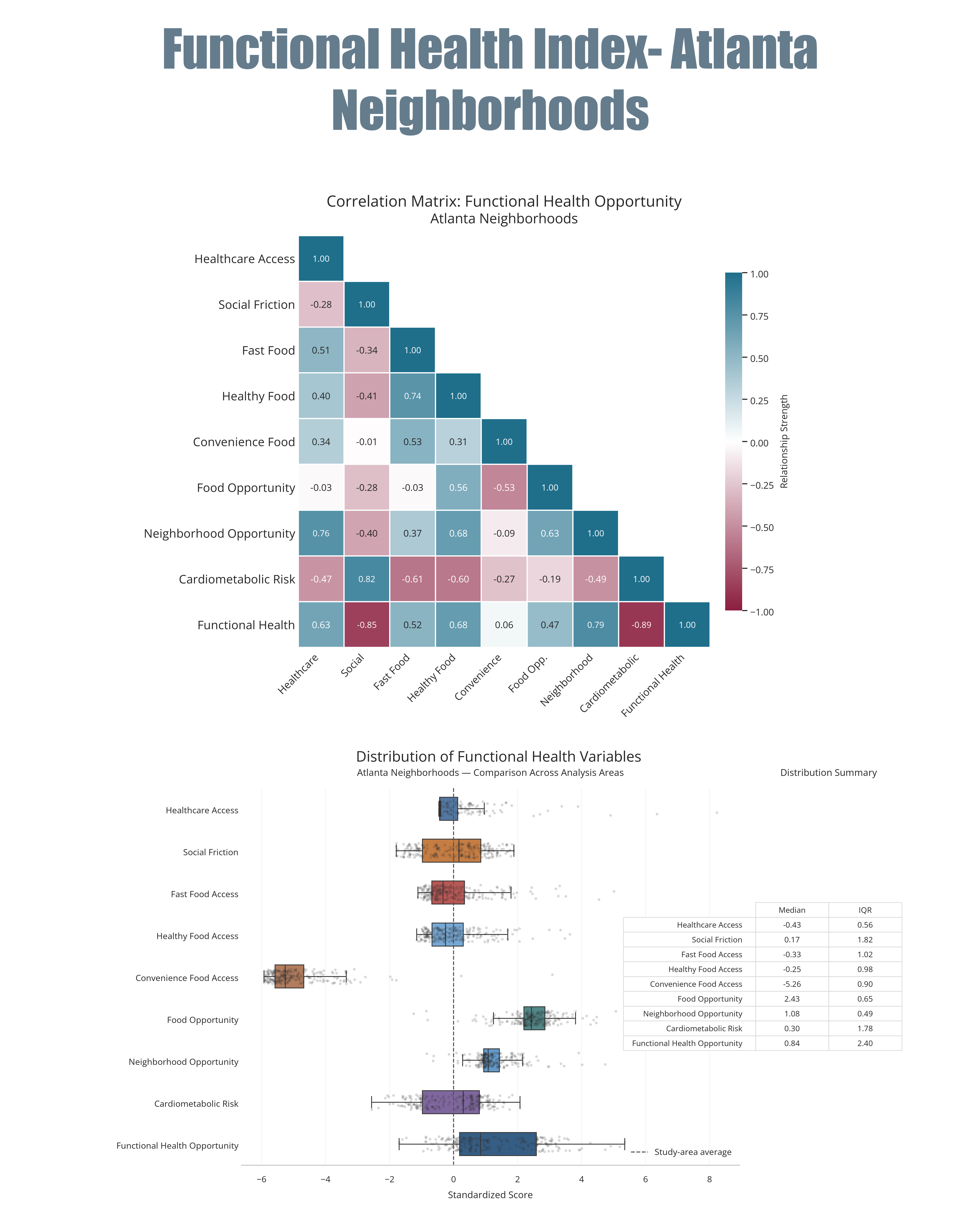
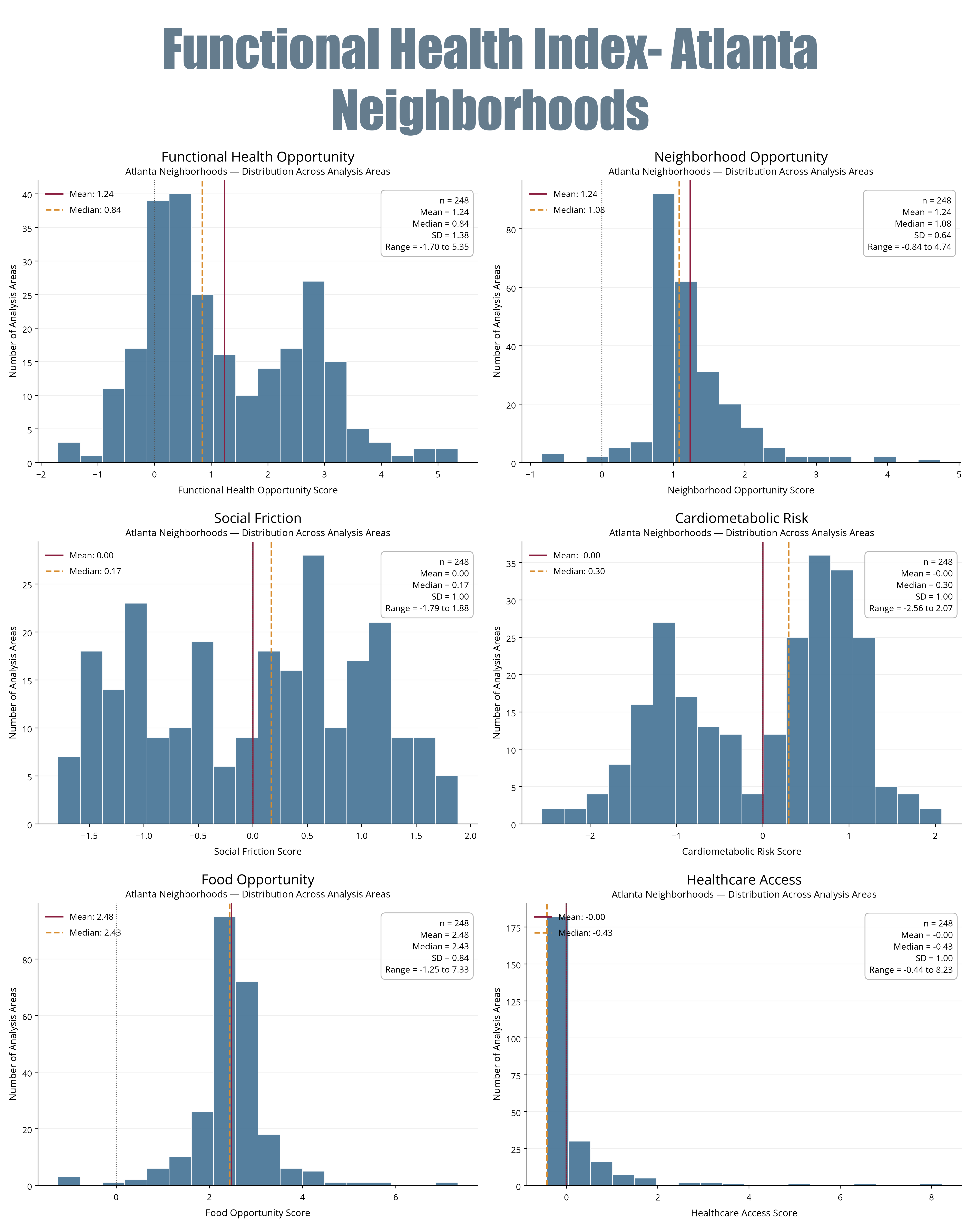
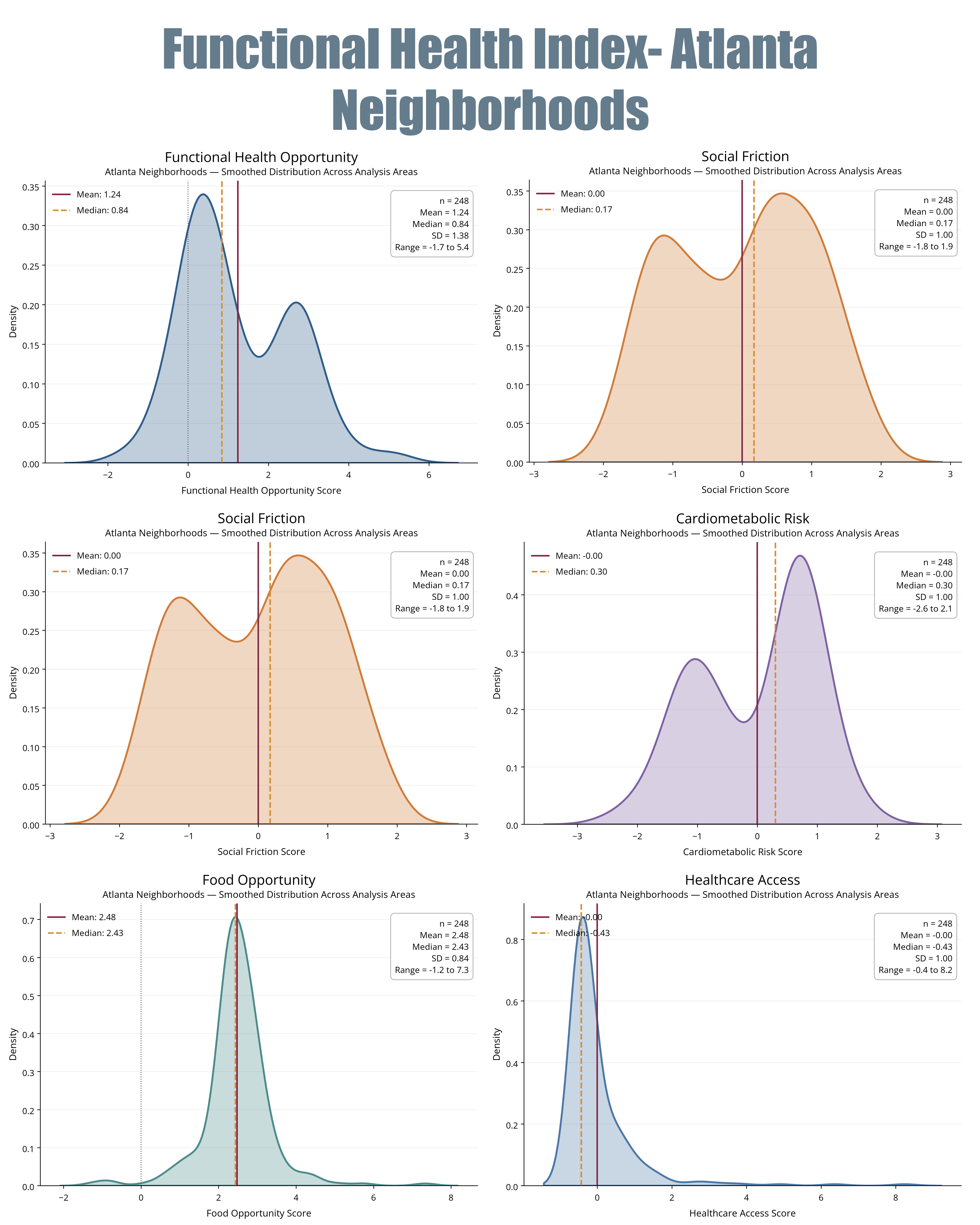
The figures shown here are an important part of the process. They demonstrate that the index is statistically consistent and that the relationships between healthcare access, food environments, social conditions, and health outcomes behave as expected. But statistics alone rarely tell the whole story.
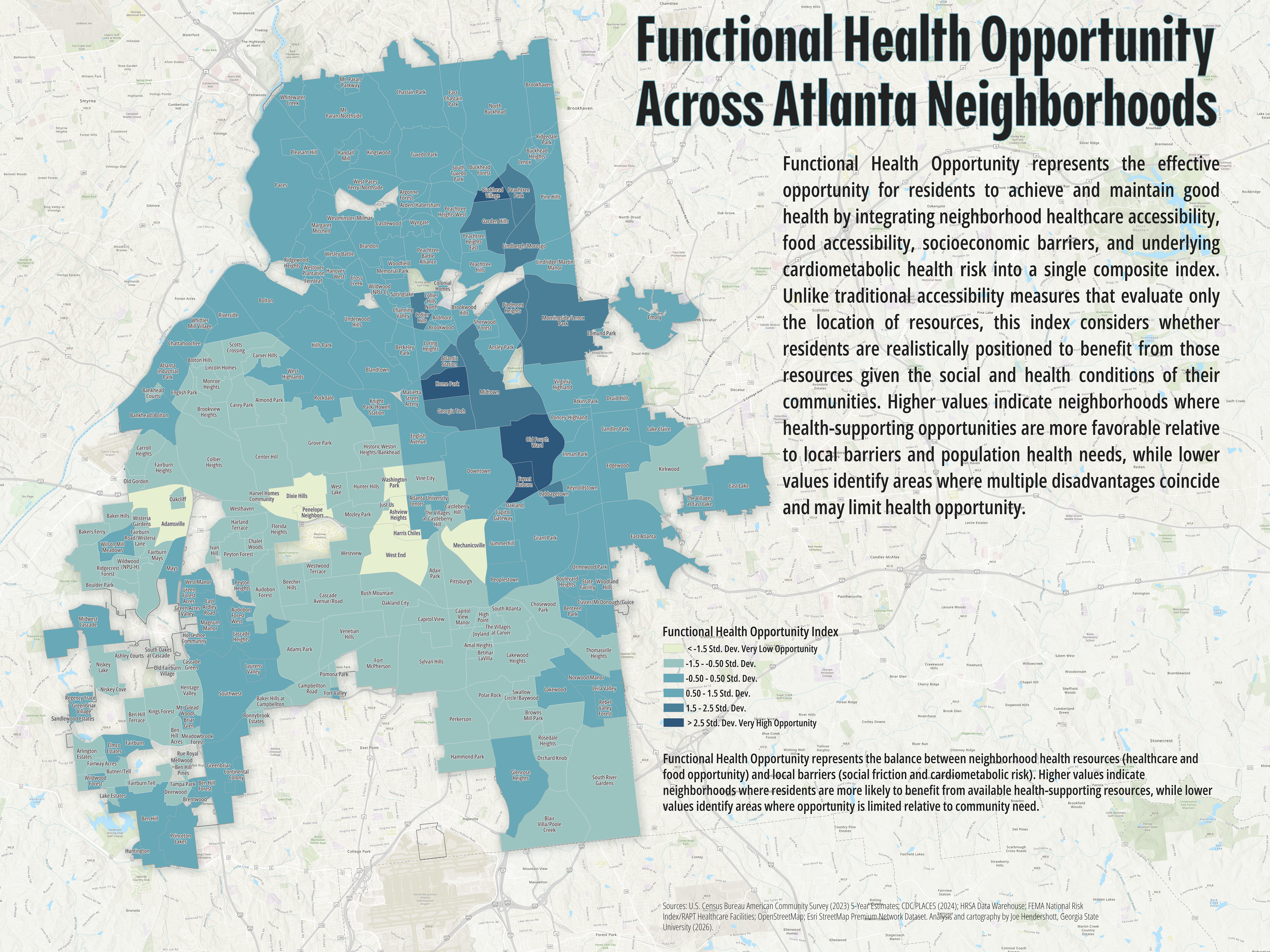
The final map is where the concept becomes tangible. Instead of looking at healthcare, poverty, or food access one variable at a time, it shows how these factors combine across Atlanta's neighborhoods. The goal is not simply to identify where resources exist, but to better understand where residents have the greatest, or the fewest, opportunities to achieve and maintain good health.
Functional Health Opportunity in Atlanta
Comments

Leave a Comment
Commenting is not available in this channel entry.

Hello, I am Joe Hendershott, a geographer and cartographer based in Atlanta, Georgia.
Popular Posts

Explore Topics
No comments yet.