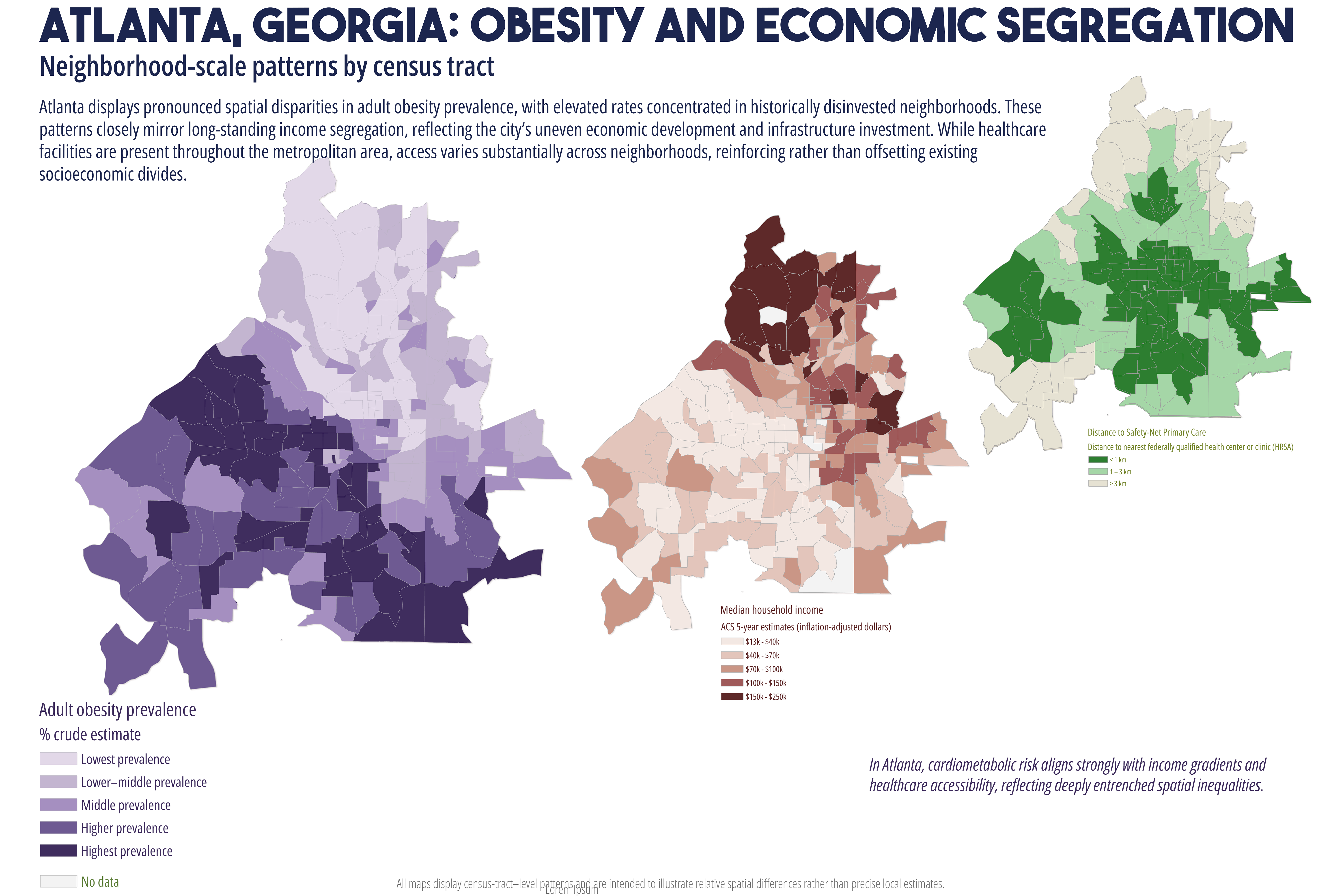
Oftentimes, I hear talk about health disparities as an access problem, more clinics, better food access, and shorter travel distances. But maps tell a more complicated story.
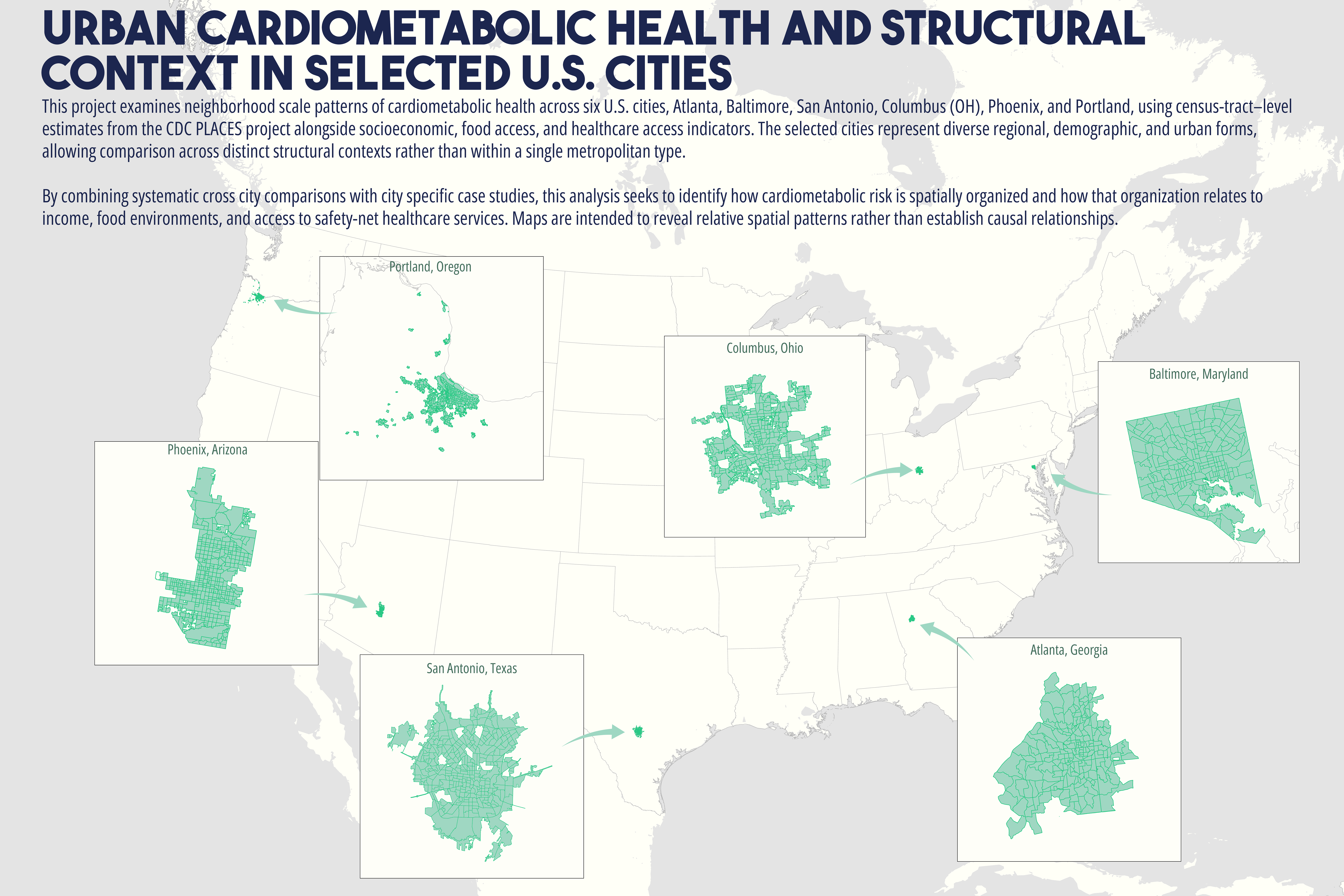
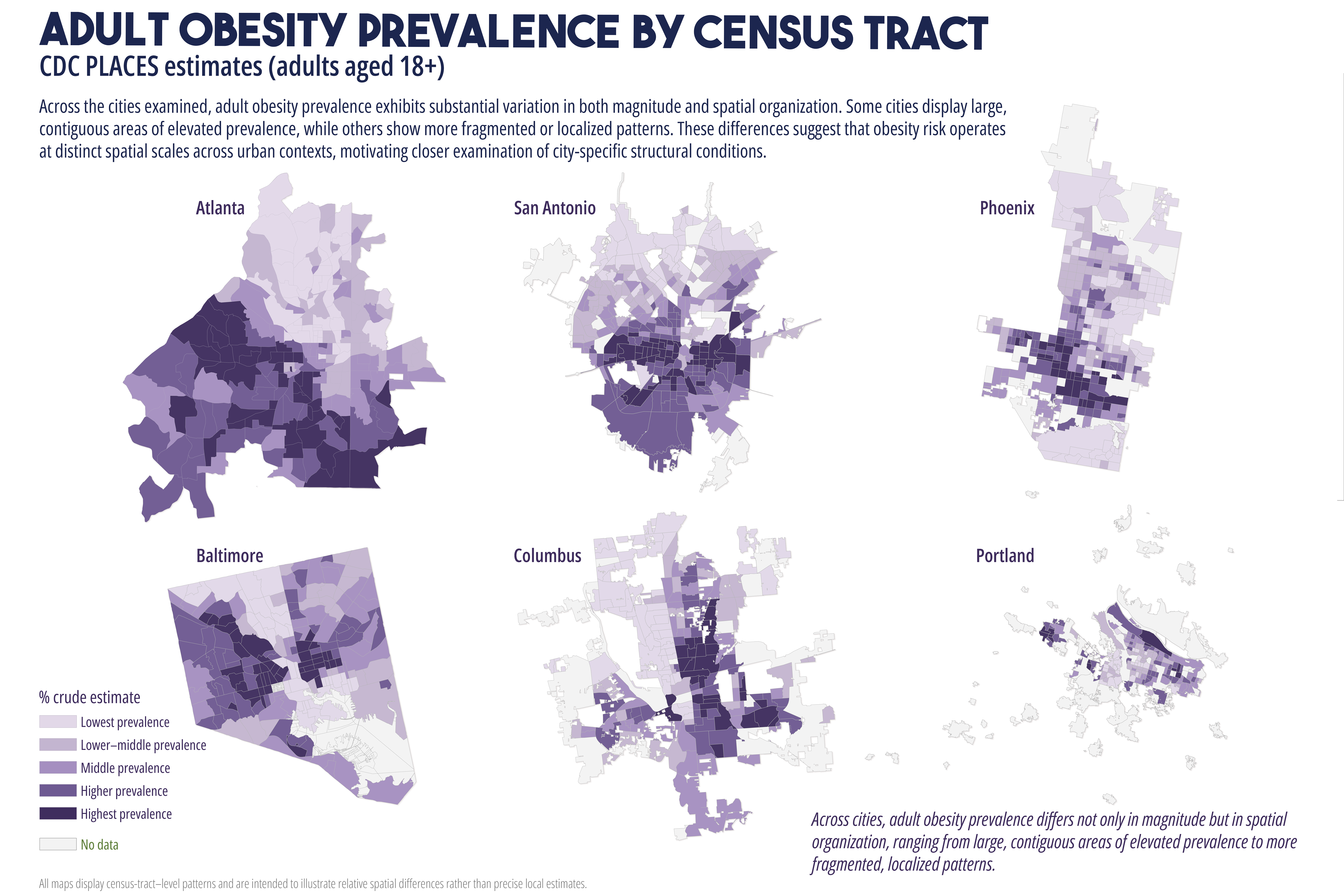
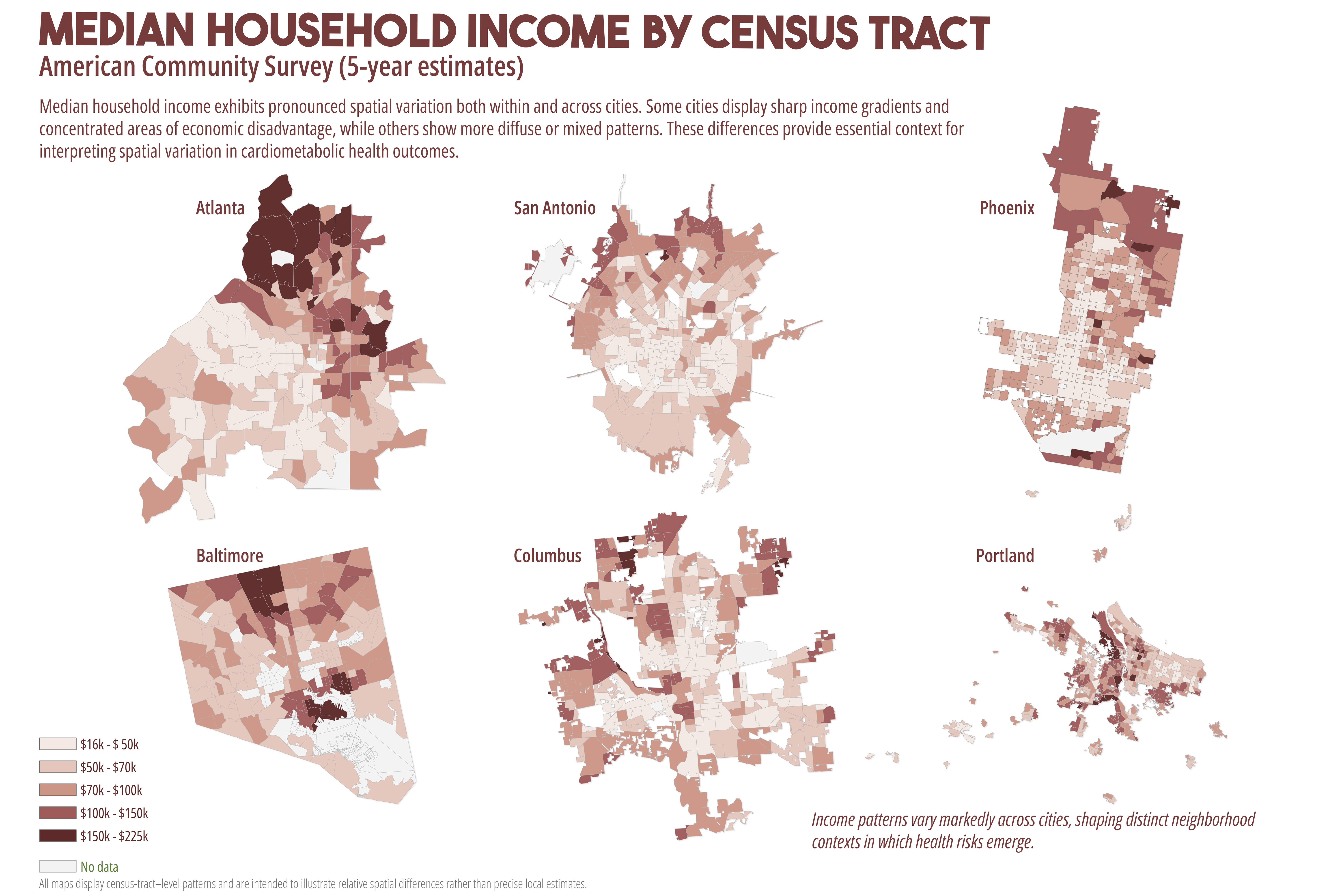
Looking across six U.S. cities, this project maps neighborhood-level cardiometabolic health alongside income, food environments, and healthcare access. In many cases, high disease burden persists even where services are nearby, suggesting that health outcomes are shaped by broader structural and environmental conditions.
If we want healthier cities, we need to design interventions that reflect how people actually experience place, not just where services are located.


No comments yet.